The Silence of the Brands
She only bought the homepage. Everything underneath it, she said she’d handle herself.

More leads. More conversions. More revenue. Preferably yesterday. My own marketing hell.

It's another stressful day at our startup. Reports, research, meetings. The usual chaos of exponential change, internal upheaval, and global shifts reshaping the tectonic plates of the IT industry.
I'm responsible for growth. Which means that when someone tells me we need to grow, I have to make it happen.
So when I come across an agency that seems to know what it's doing, I consider it a lucky break.
Our website is a mess. The technical issues are obvious. Our industry isn't saturated yet. Hell, the first bird feeders haven't even been put into production. The SEO and AEO opportunities are practically screaming at me from every corner of the internet.
The agency's pitch is straightforward. Redesign the website, fix the technical issues, build a proper SEO strategy, and make sure AI search engines know who we are, what we do, and why they should recommend us.
I listen. I nod. I smile.
"Actually, we only need the homepage redesign."
The consultant pauses.
"And SEO?"
"We'll handle that ourselves."
"And AEO?"
"I know what we're doing."

I don't, not really. But I've read enough LinkedIn posts to know that SEO is dead, AI is the future, and apparently anyone who says otherwise is trying to sell me something.
Besides, I have a budget to manage. Paid ads deliver results. Social media gets attention. The CEO loves a graph that goes up and to the right. I can give him that.
SEO takes too long. AEO sounds like another acronym invented to sell services I don't need.
I have a growth target, not a patience target.
It's September, and it's a bumper harvest year.
A colleague brings a bag of apples into the office.
"I can't get rid of them," she says. "No pesticides. The trees have produced more fruit than ever before."
I take one. It looks perfect. Smooth skin, deep red, a little golden blush near the stem. I polish it against my sleeve and take a bite.
Sweet. Juicy. Delicious.

Then I notice something moving inside.
A tiny worm wriggles through the flesh, its pale body glistening with juice. It doesn't seem to care that I'm watching. It simply keeps eating.
I drop the apple into the bin.
That night, I dream about my laptop. The Apple logo glows in the darkness. Something pushes against it from the inside, stretching the metal like skin. Then a massive worm bursts through and slithers across my keyboard.
It crawls toward me. Slowly. Deliberately.
It reaches my ear and whispers:
"Poor crawlability, Paige. Poor crawlability."
I wake up drenched in sweat.
In the kitchen, the apples I brought home sit in a bowl. I should eat them before they go bad.
I leave them there.
A month later, the new homepage is live.
It looks fantastic. Clean design, beautiful visuals, smooth animations. The CEO loves it. The board loves it. Everyone congratulates me.
Traffic from paid campaigns is healthy. Social engagement is up. The dashboard is green.
I have done my job.
Or so I tell myself.
I start working on SEO in my spare time. I publish articles generated with AI. Lots of them. They sound professional enough, provided you don't read too closely. I don't have time to read too closely.
I ask ChatGPT to create a content strategy. It gives me a list of topics, keywords, and article outlines. I ask it to write the articles, optimize the headings, and suggest meta descriptions.
I publish everything.
Then I publish some more.
The website grows. Page count goes up. Content output goes up. My little SEO experiment looks like a success.
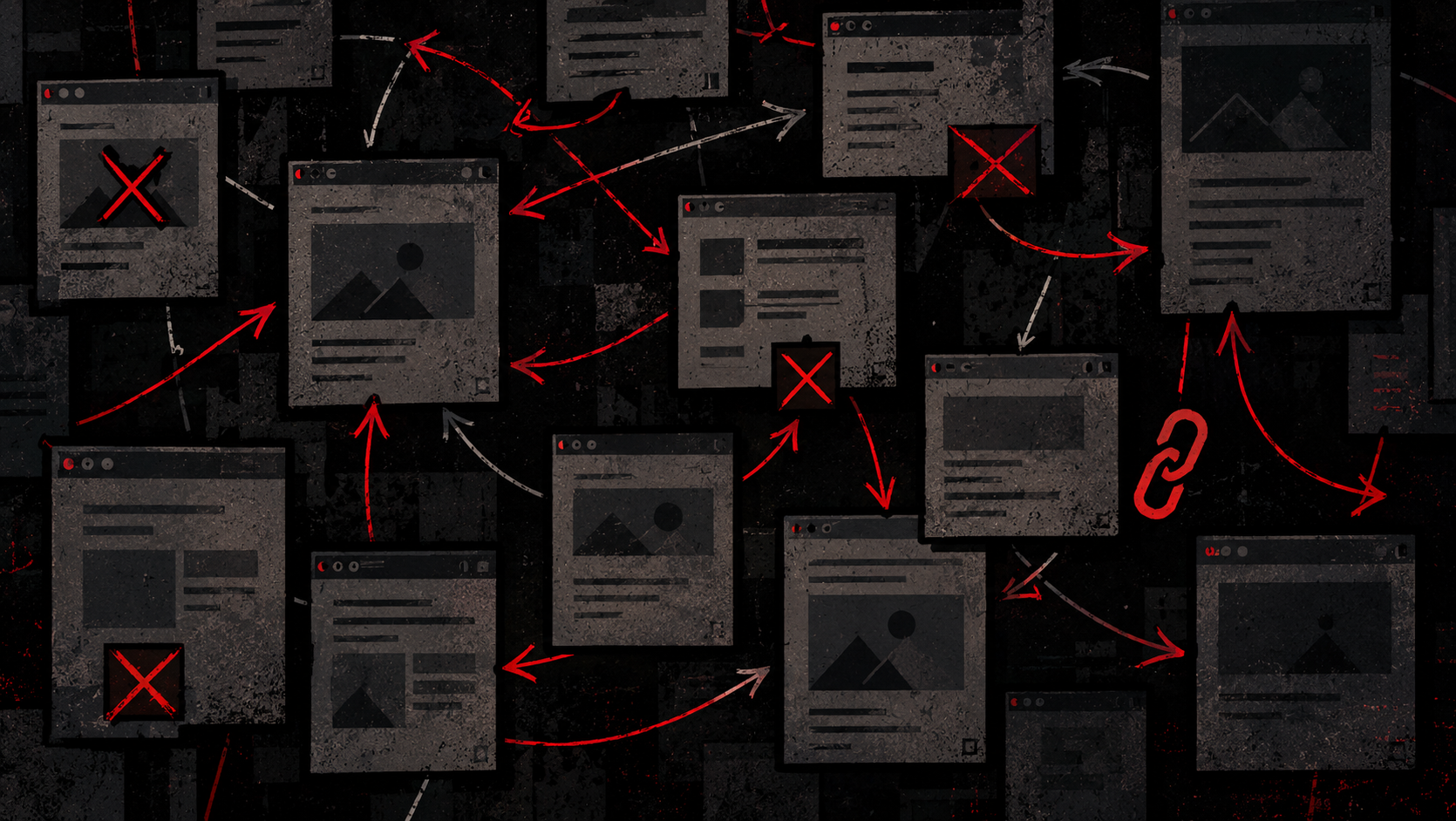
Except nobody can find half of it.
I don't bother with the technical stuff. The articles are all about related topics, so surely Google understands the connection. I let AI suggest URLs, then change them when I don't like the results. I delete old pages that don't perform. I redirect a few. Others I simply remove. Easy-peasy.
Sometimes I find two pages targeting the same keyword. I delete one and rewrite the other. A week later, I forget which one I kept.
Slowly... the website becomes a garden I plant without a map, prune without a plan, and water without checking whether anything is growing.
And the apples keep appearing.
In my dreams, they're everywhere now. On my desk. In my bed. In the office kitchen. Some are beautiful, ripe, and heavy with promise. Others are soft and brown, their skins split open to reveal tunnels of rotting flesh.
The worms are getting bigger.
A year later, the CEO calls me into his office.
He doesn't ask about the new homepage.
He doesn't ask about our social media presence.
He turns his laptop toward me.
"Where are the leads, Paige?"

I look at the screen. The numbers are terrible. Organic traffic has collapsed. Conversions have dried up. Paid acquisition costs are climbing. Our competitors dominate the search results.
Then he opens ChatGPT.
"Why isn't our brand being recommended?"
I stare at the screen.
I don't have an answer.
For the first time in a year, I open Google Search Console and look at the website as a whole.
The 404s are everywhere.
Pages I created and deleted. URLs I changed without proper redirects. Redirect chains leading nowhere. Loops sending visitors and crawlers back to where they started. Content competing against itself. Important pages buried beneath layers of forgotten articles.
I scroll through the reports, feeling something cold settle in my stomach.
The worms weren't eating the apples.
They were eating the roots.
And while I was busy admiring the fruit, my competitors were building entire orchards.
They had invested in technical SEO, useful content, internal linking, digital PR, and the kind of authority that takes time to establish. Their brands were becoming familiar to search engines and AI systems alike.
Mine had become a ghost.

I call the agency I turned down a year ago.
They run a technical audit. The report lands in my inbox, and I spend the next hour reading it in silence.
The work is extensive. The damage is real. Some of it can be fixed quickly. Some of it will take months. Some of the opportunities we had a year ago are now occupied by competitors who got there first.
The consultant is honest with me.
"We can help you recover. But we need to start by cleaning up what you've built."
I look at the report again.
There are too many problems. Too many interconnected failures. Too many things I don't understand.
I need someone who can see the entire picture.
Someone who understands not just search engines, but the way AI systems discover, interpret, and recommend brands.
Someone who can tell me why we've disappeared.
That's when I hear about him.
His name is Dr. Vermis Vescor.
He's an AEO specialist. One of the best, according to the people who have worked with him. He's also, according to the same people, not someone you'd want to meet alone after dark.

His office is on the top floor of an old building. No reception desk, no company logo. I see a door, a nameplate, and... do I smell apples?
I knock.
"Come in, Paige."
I haven't introduced myself.
He's sitting behind a desk, impeccably dressed, his hands folded in front of him. The room is immaculate. A bookshelf holds volumes on information retrieval, semantic search, knowledge graphs, and computational linguistics.
On a small plate beside his desk sits a peeled apple.
Something moves beneath the skin.
I look away.
"You're having trouble with brand visibility," he says.
"Yes. Our organic traffic has collapsed. ChatGPT doesn't recommend us. Neither do the other AI tools. We've lost leads, and I don't know how to recover."
"How much content have you published?"
"Several hundred articles."
"And how much of it is useful?"
I open my mouth.
He smiles.
"Never mind. I've seen the website."
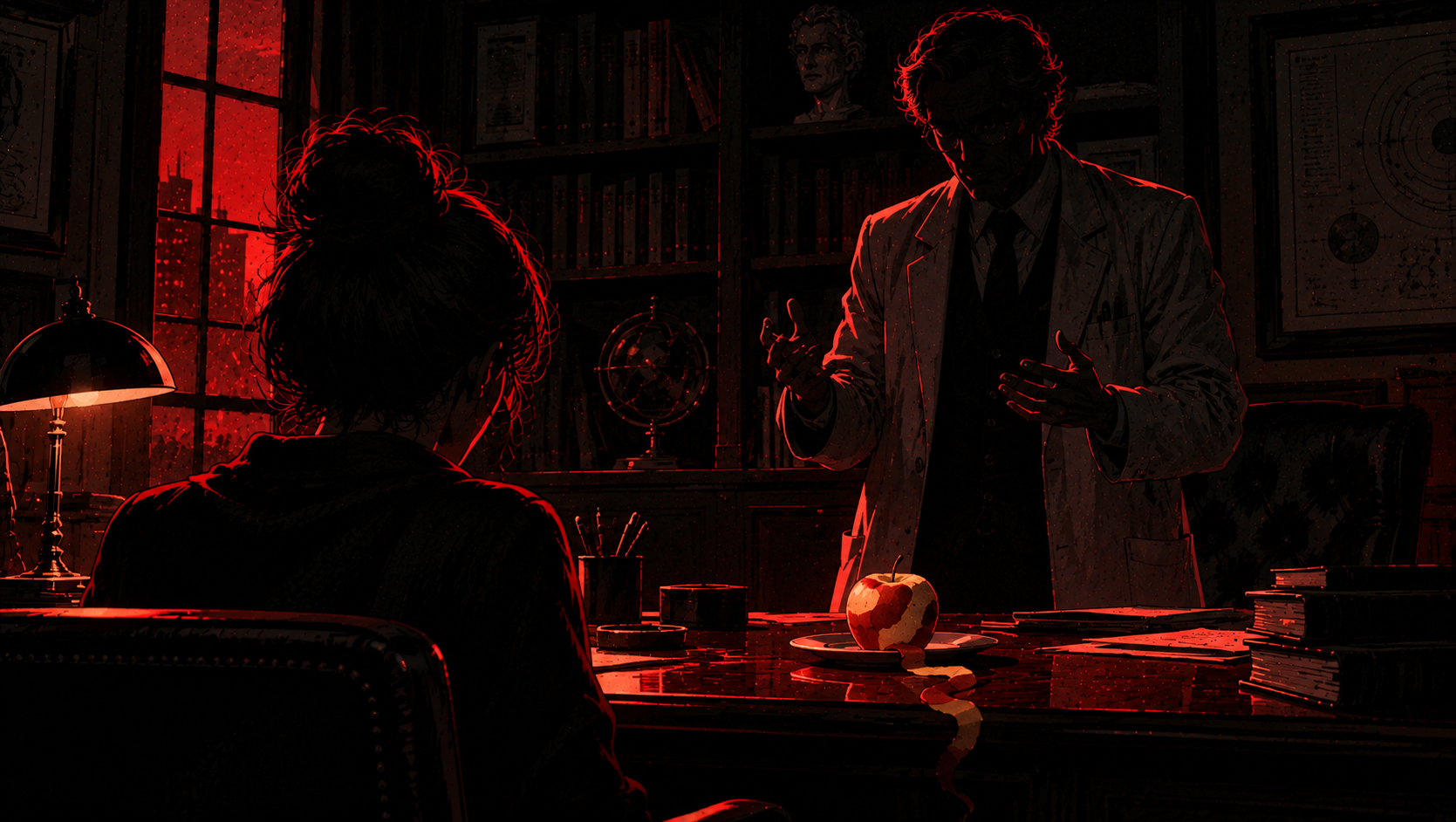
He turns his monitor toward me. A graph of our organic traffic fills the screen, followed by a map of our internal linking structure. The map looks like a dead tree. Branches end abruptly. Some connect to nothing. Others loop back into themselves.
"Your website is not a website, Miss Paige. It is a collection of disconnected assertions. You have pages, but no architecture. Content, but no coherent expertise. You have mentioned your brand thousands of times, yet you've given search engines very little reason to trust it."
He clicks through a few reports.
"Your redirects are a disgrace. Your content cannibalizes itself. Your most valuable pages are practically invisible. And your digital footprint is so inconsistent that an AI system trying to understand your business would have difficulty determining what you actually do."
He leans back.
"Tell me, Paige. Why should an AI recommend you?"
I don't answer.
"Because you published three hundred articles? Because your homepage has a lovely shade of blue? Because your paid campaigns generated an impressive return for six consecutive weeks?"
He shakes his head.
"Recommendation is not a participation trophy. You must give these systems a reason to understand you, a reason to trust you, and a reason to consider you relevant when someone asks a question your business can answer."
He speaks softly, almost kindly. That's what makes it worse.
I tell him about the agency. The homepage redesign. My decision to handle SEO myself. The AI-generated articles. The deleted pages. The redirects.
I expect judgment.
Instead, he listens with genuine interest.
When I finish, he reaches for the apple.
"Would you like to know what fascinates me about worms, Paige?"
I don't respond.
"They are extraordinarily efficient at finding what they need. They don't care about appearances. They don't care about branding. They follow the conditions that lead them to nourishment."
He takes a small knife from his desk drawer and cuts the apple in half.
A fat white worm curls inside.

He studies it with the same expression I imagine a sommelier might reserve for an exceptional vintage.
"People often confuse visibility with value. They assume that because something looks healthy on the surface, it must be healthy underneath. Search engines are less sentimental. They follow structure, signals, relationships, and evidence."
He picks up the worm with the tip of his knife.
"And when you create a garden without understanding the soil, you should not be surprised when something else begins to feed."
He places the worm in his mouth.
Chews.
Swallows.
I feel my stomach turn.
"Now," he says, reaching for his keyboard, "let us discuss your entity signals."
We spend three hours together.
He identifies the technical failures. Maps the content. Separates useful pages from the ones that need to be consolidated, rewritten, redirected, or removed. He builds a strategy around the topics our business should own, the questions our customers actually ask, and the evidence that would establish us as a credible source.
He explains why AEO cannot compensate for a broken website. Why a brand cannot simply demand to be recommended. Why useful content, technical accessibility, clear information architecture, consistent brand signals, and genuine authority must work together.
He shows me how our competitors have built relationships between their pages, their expertise, their external mentions, and their reputation.
Then he closes the laptop.
"Recovery will take time," he says. "You will need to make difficult decisions. Some of your content must go. Some of it must be rebuilt. And you must stop confusing the production of content with the creation of value."
I nod.
For the first time in a year, I feel like someone understands the problem.

I stand to leave.
"One more thing, Paige."
I turn around.
He points toward the plate on his desk.
"Take an apple. They're from my garden."
I look at the fruit. Perfect skin. Deep red. A golden blush near the stem.
"No, thank you."
He smiles.
"Suit yourself."
I leave his office and hurry down the stairs.
Outside, the afternoon sun feels almost painfully bright. I take out my phone and open Google Search Console. The 404s are still there. The traffic is still down. Nothing has changed.
Not yet.
But now I have a plan.
That night, I dream of apples again.
This time, I am standing in an orchard. Every tree is heavy with fruit. I reach for the nearest apple, but before I can touch it, the skin splits open.
Hundreds of worms pour out.
They crawl over my hands, up my arms, across my neck. I try to scream, but they fill my mouth.
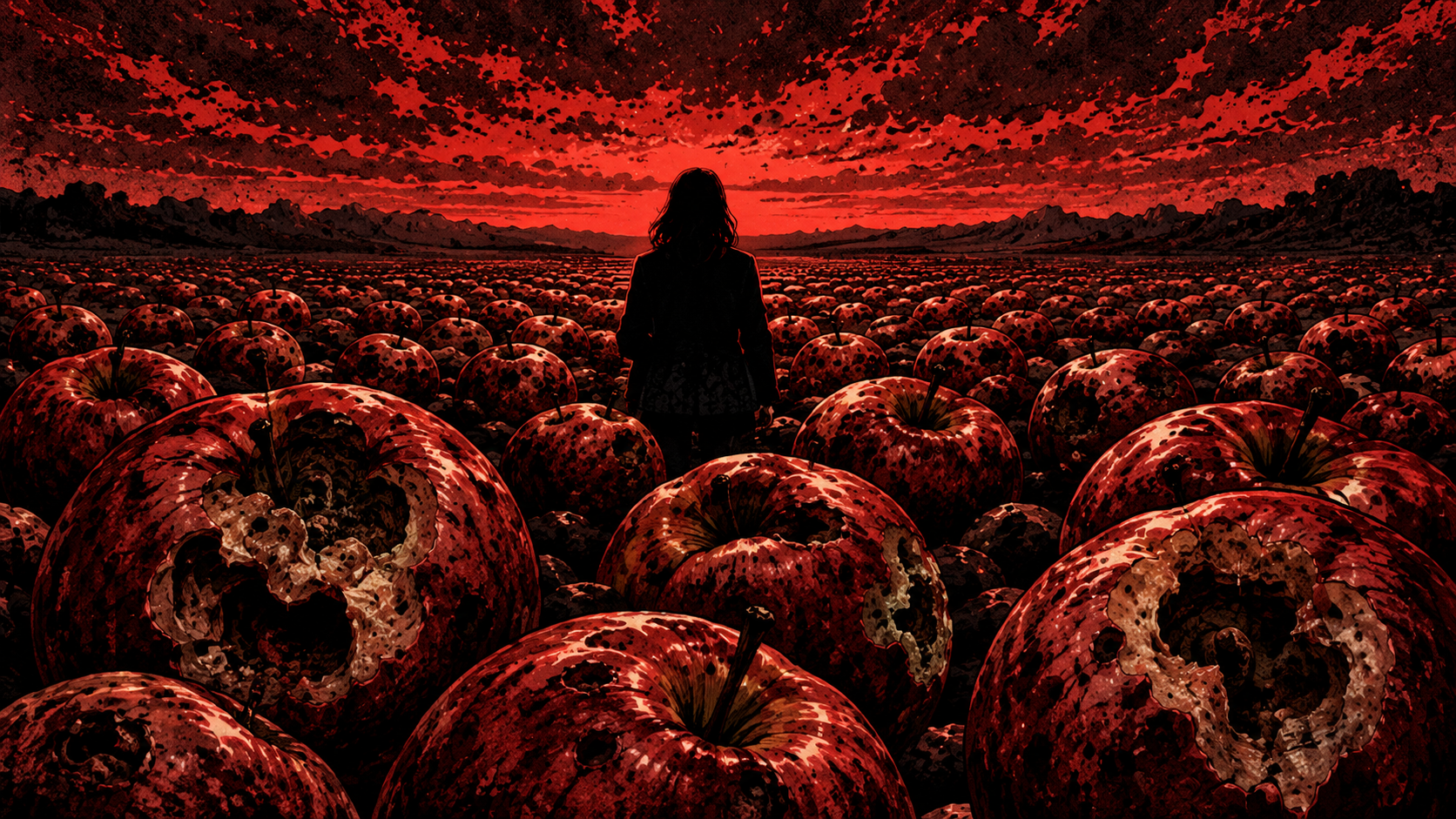
Then I see him.
Dr. Vescor stands between the trees, holding a silver tray.
He looks perfectly calm.
"Don't be frightened, Paige," he says. "These are the healthy ones."
He lifts a worm to his lips.
"Your website, on the other hand..."
He smiles.
"...is positively infested."
I wake up gasping.
My phone lights up on the bedside table.
A notification from Google Search Console.
New issue detected: Page indexing.
I don't open it.
I already know what it says.
Somewhere, deep inside the website, something is still crawling.
The full collection

Launch Day the 13th

A Nightmare on Dev Sprint
The Tech-SaaS Chain Saw Massacre

Leave your email and you'll get an invite to the premiere.
One of these stories is getting taken apart live, with the people who were there. We're not saying which one yet. Register and you'll know before anyone else.
He didn't only leave the note. He made one more stop on his way out, and he hid something on this page. He didn't hide it well. He left it in limbo, same as everything else that year.
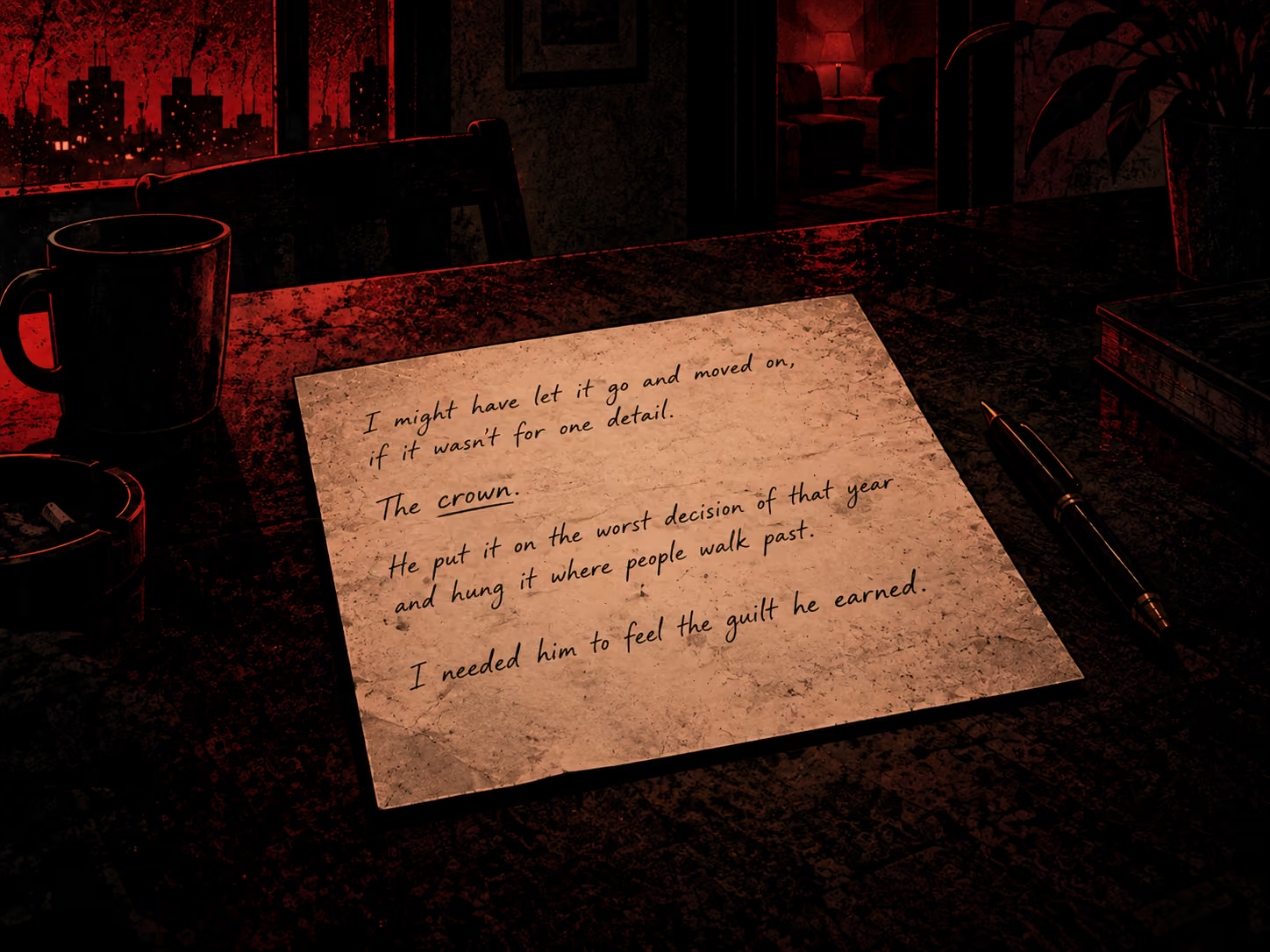
Not many people will see this screen. We're posting the full list of everyone who solved it in October.
Leave a LinkedIn link if you'd like to be tagged, or a name to go by if you'd rather not be.
No pitch/DMs incoming, this one is purely for fun.