Fintech website migration: the 21Shares playbook for regulated sites
A fintech website migration keeps its rankings and its launch date when every page in every market has an owner, and every input from across the business, from market data to licenses, translations and legal approvals, sits on the plan from day one. We put that into practice moving 21Shares' 11 regional versions in 4 languages to a new platform, live in May 2024.
Key takeaways
- Give market-data feeds, licenses, translations per jurisdiction, legal approvals and stakeholder sign-off a date and an owner from day one, because they set a regulated launch date.
- Map every page in every market to an owner and a keep, merge or redirect decision, and get redirects signed off weeks before launch.
- Publish marketing content to all markets at once, but publish product pages one market at a time, with daily automated checks for restricted content.
- Send compliance one link per change, with the preview and the live page side by side, a plain list of what changed and the source copy attached.
- Pick the platform after the review process is clear: it needs staging with a change list, publishing roles, page branching, an approval step and per-market publishing.
- Design the first setup around the next markets and a possible rebrand, so 21Shares' second site and its October 2025 rebrand built on the same foundation.
- Go live after the market close, hold a 6 to 9 AM support window with a 7 AM go/no-go, and freeze changes for three days before a major launch.
- After the migration, 21Shares launches a new region in about a week instead of a month and saves about $300K a year.
What sets the launch date in a regulated migration
A regulated fintech website migration launches on time when every input from across the business has a date and an owner from the first week, the same as the build. Those inputs are many: market-data and product-data feeds, licenses or registrations for each market, translations for each jurisdiction, legal and compliance approvals, and sign-off from the people who own the brand, the products and the risk. Each one sits in another team's queue, and a website rarely tops it.
Stakeholder management is the part buyers tend to underestimate. A regulated site has more people with a say than most sites: product, legal, compliance, brand, regional leads and often leadership. We agree early who approves what, in which order and within how many days, so a finished page doesn't sit waiting for a reviewer nobody knew was needed. Legal approval gets the same treatment. Where a rule requires a named person to approve a communication before it's used, that approval belongs on the plan with a date, like any other task.
On our 21Shares migration, which went live in May 2024, a good share of the planning went into these inputs. We were waiting on licenses for several regional versions until close to launch, and French, German and Italian each needed an EU version and a Swiss version, translated and approved separately. That's normal for a business opening new markets while it moves its website. It's also why we now plan licenses, translations and approvals as tasks with owners from day one.
Rankings depend on ownership in the same way. Traffic losses after a move come from dozens of small errors that nobody owns: a language link pointing to the wrong country, a test page Google can index, a page missing from the sitemap. When every page in every market has an owner who checks it before and after launch, those errors get caught while they're still cheap to fix. That ownership model sits behind how we design and run financial services websites, and the sections below show how it played out on a live site with 11 regional versions.
The 21Shares migration in numbers
21Shares moved 11 regional versions in 4 languages to a new platform in about three months, from early February to go-live in May 2024, and cut the time to launch a new region from about a month to about a week. Before the move, the site ran on a slow, custom-built CMS where every change needed an engineer, so a new product page or a regional launch waited in a development queue. For a sense of budget, comparable multi-market finance projects of ours have ranged from about €24K to €181K, with a median near €64K and 8 to 12 weeks of delivery, and our published pricing starts at $25,000 for Webflow Development and $50,000 for Transform, which adds strategy and design.


The new Webflow site covered Europe, Switzerland, the US, the UK, the UAE and a Rest of World version, with live data for more than 200 products. It went live at about 22:00 CET, as the US market closed.
| Task | Before the migration | After the migration |
|---|---|---|
| Launch a new region | About 1 month | About 1 week |
| Publish a new product page | About 1 week | 1 to 2 days |
| Launch a new marketing site | 2 to 4 weeks | 1 to 3 days |
The site also got 61% faster, and internal complaints about the website fell by 37.5%. 21Shares saves about $300K a year, and three engineers and a product manager moved to higher-value work.
Handing publishing to marketing mattered most to the people who ran the site. Filip Geschwandtner, Head of Design at 21Shares, said in our 21Shares case study that the team “were confident in handing things over to marketing”, something they “couldn’t do before”. Arindam Bajpayee, VP Engineering, tied it to the growth plan: “We want to be in as many markets as possible… we can expand faster and drastically reduce costs.”
That pace held after launch. A UK version went live four weeks later, a second site followed at six weeks, and the brand went through a full rebrand in October 2025. Today the site runs in 14 regional versions.
How to keep rankings through a migration
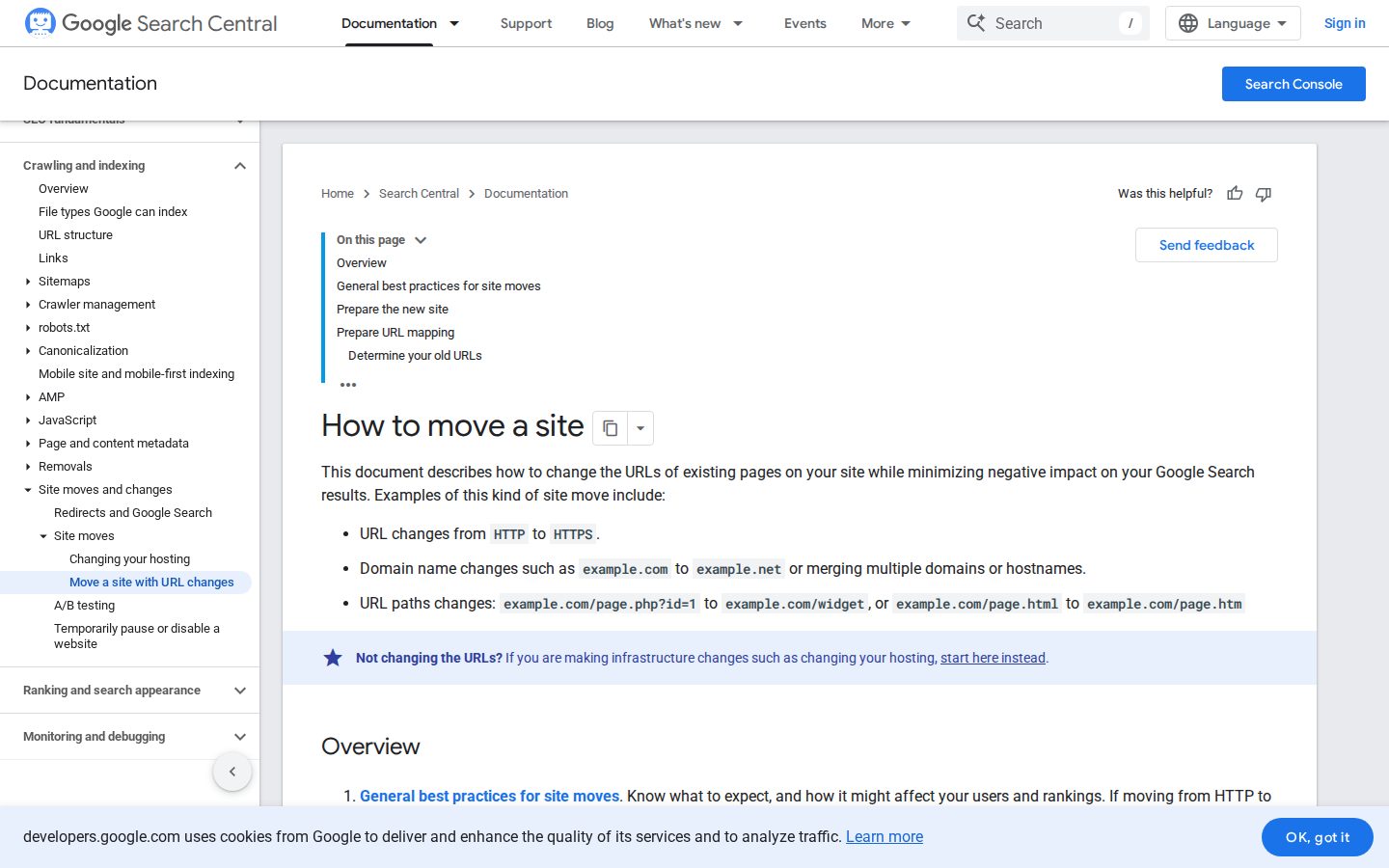
A fintech website migration keeps its rankings when every old URL is mapped to a new one before the move starts and every language version links correctly to the others. Google’s guidance on site moves with URL changes (updated August 2026) sets the order: prepare the new site, prepare the URL mapping, start the move, then monitor. The same page says rankings may fluctuate during a move, and that on a medium-sized site “it can take a few weeks or more” before the new URLs replace the old ones. Plan for a dip and a recovery, and treat any promise of zero movement as a warning.
We cover the general ranking question, and what to expect in the first weeks, in our answers to whether you'll lose rankings when you migrate to Webflow. A regulated, multi-market site adds the steps below.
Map every page in every market
On a multi-market site, the unit of work is one page in one market. With 11 regional versions, a single product can live on many URLs, each with its own copy and its own approval status. We give every page in every market an owner and a decision (keep, merge or redirect), and we get redirects signed off weeks before launch. A redirect list that lands in the final days leaves no time to test what it does to rankings or to restricted content, so we ask for it early and help the client's team build it.
Link language versions both ways
Hreflang tags tell Google which language or country version of a page to show. Google’s documentation on localized versions (updated September 2026) requires each version to list itself and every other version; if page X points to Y and Y does not point back, the annotations “may be ignored or not interpreted correctly”. Google’s site-move guidance adds that hreflang has to be updated to the new URLs after a move. On a site with an EU and a Swiss version of the same French page, one missing return link can show a Swiss searcher the EU page, with the wrong product list and the wrong legal wording.
Track the first weeks after launch
After go-live, check every page in every market for the errors that cost rankings: dead pages by market, test pages that Google has indexed and pages missing from the sitemap. Protecting rankings through the switch is one job and growing them afterward is another, covered in our guide to advanced SEO and AEO for finance websites.
What goes wrong on regulated multi-market sites
The costliest mistakes in a regulated migration put the wrong content in front of the wrong market. UK figures show how closely this is watched: according to the FCA’s financial promotions data for 2024, authorized firms amended or withdrew 19,766 promotions after FCA intervention that year, up 97.5% from 10,008 in 2023.

A regulator doesn’t care why the wrong product appeared in the wrong market. All it sees is that it did. The patterns below are ones we've seen across regulated, multi-market sites, including a few mistakes of our own, and each one now shapes how we work.
- One publish button for every market. When a single action publishes everywhere, products approved for one region can show up on another region’s site, and test pages can end up in Google. Product pages now go live one market at a time, with automated checks every day.
- URLs renamed in one place only. Renaming one region’s URLs while old links elsewhere still point to the old addresses causes a spike in dead pages and can leave one language version with more bugs than any other.
- A product removed in one market only. A delisted product has to disappear from every market where it appeared. Without one switch, it gets pulled by hand, market by market, with redirects added each time.
- A preview that does not match production. If the review environment pulls different data than the live site, compliance can approve a new layout that still shows old copy, and the problems show up live.
- No audit after launch. Errors pile up on a site nobody audits. The ones a CMO should worry about most are compliance errors, such as a retail visitor who can open a product not approved for retail in their market.
How to serve restricted content by market
One fintech site can serve several languages and regions, with content restricted in one market and required in another, when product pages publish one market at a time and the regulator’s rules run as automatic checks. Marketing content can go to every market at once. Product pages need more care, because each product is approved for specific markets and sometimes for specific investor types, and a product shown to the wrong market undercuts the trust fintech websites work to earn.
Start by writing the rules down, then turn each one into a check that runs every day. Two come from our own process: no EU product ever shows on the US site, and US pages never link to another market. In its 1998 statement on offering securities over the internet, the SEC said it would generally not treat an offshore online offer as aimed at the US if the site carries a prominent disclaimer and the offeror uses procedures “reasonably designed to guard against sales to U.S. persons”. A daily check that keeps EU products off US pages is the website’s part of that work. What counts as reasonable is a call for your counsel.
Investor type adds a second layer. The FCA lifted its ban on retail access to certain crypto exchange-traded notes on October 8, 2025 and classes them as Restricted Mass Market Investments, so firms must not offer incentives to invest, need appropriateness assessments, client categorization and cooling-off periods, and must highlight relevant risk warnings. On a website, that means who the visitor is matters as much as where they are. The next step we're building is a setup where each section of a page is switched on or off per market and investor type, so restricted content is never sent to the wrong visitor at all.
Language splits by jurisdiction too. Give each jurisdiction’s translation its own owner and review date, the way the EU and Swiss versions of French, German and Italian each had their own on the 21Shares site.
How compliance can review changes quickly
Compliance reviews website changes fastest when each change arrives as one link, with the preview and the live page side by side, a plain list of what changed and the source copy attached. Reviewers approve the individual change, so a one-line edit to a disclaimer never sends a whole product page back through full review.

Small teams make this format necessary. In the Ncontracts Future of Compliance 2026 survey of 183 financial institutions (December 2025), 38% run compliance with one or two people, 64% expect flat or lower compliance budgets over the next 12 to 18 months, and institutions that rely on manual processes report 7x more examiner questions and concerns. The survey is from a compliance software vendor whose customers are banks and other financial institutions, not asset managers, yet buyers at other financial firms tell us the same thing; one described their compliance team on a sales call as “very understaffed right now”.
The side-by-side only works when the preview uses the same data as production. Otherwise reviewers approve something that will not be what goes live. The record of approvals also needs to be easy to find later. For US broker-dealers, FINRA Rule 2210 requires a registered principal to approve every retail communication, websites included, before it is used or filed. That rule covers FINRA member firms only, but any regulated team gains from a review trail that shows exactly what was approved and when.
Compliance outcomes stay with your legal team. A partner’s job is to make review fast and visible, and that is the standard to apply when you vet a fintech website partner on compliance.
Which platform features a regulated migration needs
A regulated, multi-market migration needs a platform that lets marketing work freely while compliance controls what goes live. These are the features we check for first:
- Staging with a change list. Reviewers see exactly what changed between staging and production before anything is published.
- Publishing roles and permissions. Marketers can draft and edit, while fewer people can publish or merge.
- Branching. A page can be changed in a copy and merged back once approved, while the live page stays untouched.
- An approval step. A reviewer role signs off before a change is merged, which fits a compliance reviewer.
- Per-market publishing. Content can wait in draft in one market while the other markets stay live.
- Localization with hreflang. Language and country versions get the right tags without hand-editing every page.
- Shared design libraries. One approved design change reaches every connected site.
Webflow, the platform 21Shares moved to, has each of these. Its publishing workflow shows the differences between staging and production and can publish straight from staging, on the Enterprise plan. The pre-publish summary lists every change and who made it, though it leaves out site settings changes other than custom code, so reviewers need a note for those. Page branching takes a snapshot of a page that a team can change and merge back, and by default content editors and marketers can create branches but cannot merge them. Design approvals add a Reviewer role, and custom roles without the “Make changes without approval” permission need approval before they merge.
Per-market publishing takes setup discipline on any platform. Webflow’s guidance on publishing localized content says there’s no “publish just one locale” button, so content is staged per market with “Draft in locale” on each CMS item or static page, and turning off a locale’s publishing removes that locale from the live site. Its localized SEO and locale routing sets the lang attribute for each locale and adds hreflang tags to the auto-generated sitemap for locales with publishing turned on; a custom sitemap needs the tags added by hand. Our one-market-at-a-time rule is a process we set up and check daily for exactly that reason.
We build on Webflow for marketing teams that want to publish without waiting for an engineer, and you can see how we run Webflow builds for marketing teams. Other platforms serve fintech well too. Sanity’s Content Releases let teams “organize and schedule updates across multiple documents” and preview them so related changes publish together, and Contentful’s Launch groups content into releases that publish at once or on a set future date. We start with your markets and your review process and pick the platform last.
How to plan design for the long term
Design for a regulated, multi-market site starts from where the business is going: the next markets, the next products, the investor types it will serve and whether the brand itself will change. We stayed close to the 21Shares team through the project to understand those long-term goals, because the first setup would carry every region, product and site that came after it.
That's why we treat the first design as a system of reusable parts. A product page template, a disclosure block and a risk warning are each designed once and reused in every market, so compliance approves the part once and a later change reaches every page that carries it. Webflow’s Shared Libraries work the same way across sites: they share components, variables and assets, one library update cascades approved changes to every connected site, and each designer reviews the update before accepting it, which Webflow says covers everything “from small style tweaks to complete rebrands”.
The first setup carried what came next. 21Shares added a second site six weeks after launch, has since been acquired by FalconX, and went through a full rebrand in October 2025, about 17 months after the migration. Running the rebrand as its own project also follows Google’s advice to make one big change at a time. When a rebrand ships, translated and regional pages are the content most often left behind, so plan it market by market, with the same page owners who ran the migration.
How to time releases around market hours
Release a regulated fintech site after the market closes and have it stable before the next open. 21Shares went live at about 22:00 CET, as the US market closed. Google’s site-move guidance points the same way for a different reason: move during a traffic dip, so fewer people hit problems and more server capacity goes to Googlebot’s crawling.
Buyers raise this before we do. “Historically, we haven’t loved pushing out changes when the market is open,” one buyer told us on a sales call. We run every regulated release on four rules:
- Go live after the close. The site has to be stable before the next open, so no investor sees a half-migrated product page during trading.
- Hold a 6 to 9 AM support window for product launches. The team that shipped stays on call while the first visitors arrive.
- Make the go/no-go call at 7 AM. That leaves time to act before the market opens.
- Freeze changes for three days before a major launch. Nothing new enters the release once review has signed off.
How to audit the site after launch
Audit a regulated site in full 30 days after launch, then every month, because errors pile up once the project team moves on. Fix product-data accuracy first, restricted content second and broken links third, and report the numbers to both marketing and compliance. We call this WebOps: the site keeps owners, checks and a monthly report long after launch day, on retainers from $6,000 a month over a 12-month term.
Track these numbers every month:
- Dead pages by market, so a broken region shows up on its own.
- Restricted pages appearing in search, the earliest sign that gating has failed.
- Product data compared with the source, so a figure on the site never drifts from the official record.
- Complaints from internal stakeholders, the quickest read on whether the site works for the people who use it daily.
- Time to launch a page, a product and a region, the numbers that show whether the migration paid off.
A buyer checklist for regulated migrations
Use this checklist to test a migration partner before you sign and to spot trouble while the project runs.
Questions to ask before you sign
- What shaped the timeline of your last regulated launch, and who owned each input?
- Show me a page-by-market map from a past project.
- How will my compliance team see exactly what changed?
- Can product pages go live one market at a time?
- What automated checks protect restricted content?
- When do you release relative to market hours?
- What did your last post-launch audit find, by the numbers?
Warning signs during the project
- One “publish everywhere” button for products as well as marketing content.
- A preview environment that uses different data than the live site.
- A redirect list delivered in the final week.
- Translations that nobody owns.
- Legal review scheduled for the last week.
The red flag that should end talks
The biggest red flag is a partner who cannot name the regulatory failure they test against, or the number of issues their last audit found. Both answers tell you whether they have run a regulated site after launch or only built one.
If your regulated site has to move this year, talk to one of our strategists before the build is scoped and bring your list of markets; we start every migration with the page-by-market map. If you want a baseline first, scan your current website free.
How long does a fintech website migration take?
Our builds typically take 8 to 16 weeks, with projects from $25,000 for Webflow Development and $50,000 for Transform, which adds strategy and design. The 21Shares migration, 11 regional versions in 4 languages with live data for more than 200 products, ran from early February to go-live in May 2024. Licenses, translations and legal approvals shape the date as much as the build does.
How much does a fintech website migration cost?
Across nine comparable financial services projects of ours, prices ranged from about €24K to €181K, with a median near €64K and 8 to 12 weeks of delivery. Our published pricing starts at $25,000 for Webflow Development and $50,000 for Transform. The number of markets, languages and data feeds moves the price most, and ongoing care runs on retainers from $6,000 a month on a 12-month term.
How long should we keep redirects after a website migration?
Keep the redirects from a website migration for at least a year. Google’s site-move guidance says to keep them as long as possible, generally at least 1 year, and suggests keeping them indefinitely for users who still follow old links. On a regulated site, also check that no redirect sends a visitor to a product approved only for another market.
Can we change our domain or redesign during a fintech website migration?
Google recommends making one big change at a time, so move the domain, the CMS and the layout in separate steps where you can. Separate steps make it clear which change caused a ranking drop, and on a regulated site each change also needs its own compliance review. If a deadline forces two together, add time for translations.
Can fund data and benchmark rates be pulled into a fintech website automatically?
Yes. Fund data and other product figures can feed into a fintech website from your market-data system instead of being typed in by hand. The 21Shares site runs live data for more than 200 products this way. Plan the feed as a launch input with its own owner and date, because product figures have to be right on day one in every market.
Is an info icon enough for regulatory disclosures on a fintech website?
An info icon alone is risky for regulatory disclosures, because the FCA expects firms offering crypto ETNs to UK retail investors to highlight relevant risk warnings, and a warning hidden behind an icon is easy to miss. Show the warning as visible text near the claim it qualifies, and let your counsel make the final call per market.
Do we need hreflang if two markets share the same language?
Yes. Hreflang marks the country as well as the language, so an EU French page and a Swiss French page each need tags that list themselves and each other. Without them, Google can show a searcher the wrong country’s version, with the wrong product list. On the 21Shares site, French, German and Italian each had separate EU and Swiss versions.
Does the European Accessibility Act apply to a fintech website?
The European Accessibility Act has applied since June 28, 2025, and banking services are among the services that must now be accessible to people with disabilities, according to the European Commission. Whether your marketing site is in scope depends on what you offer and where, so ask counsel and put accessibility checks in the migration plan either way.

Founder and CEO of Flow Ninja. Building in Webflow since 2015, he writes on platform choice, CMS migration, and website intelligence, and runs a YouTube channel on the same.



See your website the way a senior strategist does
Foresight scans your site across 10 strategy dimensions. You get a scored breakdown of every gap costing you leads.
Continue reading









Ready to escape your CMS nightmare?
100+ successful migrations. 0 ranking disasters at launch. One embedded team that's done this before.