

We built an autonomous process for the team, without them depending on us or on working hours in another time zone. Nowadays, we don’t even know when they’re working on microsites.

Intro
Checkout.com sells to enterprise merchants, where every deal involves a buying group with many stakeholders. Microsites became central to their account-based marketing. One place for the whole story, which every stakeholder can explore on their own terms, kept live and updated for the life of the deal. That meant a steady stream of microsites for regional teams around the world. Having just moved the main site to Webflow, Checkout.com chose to see what their existing platform could do before adding another tool, so they turned to us, their web team for several years. The goal was for regional marketers to build microsites themselves, without every request going through a developer.
What we did


Challenge
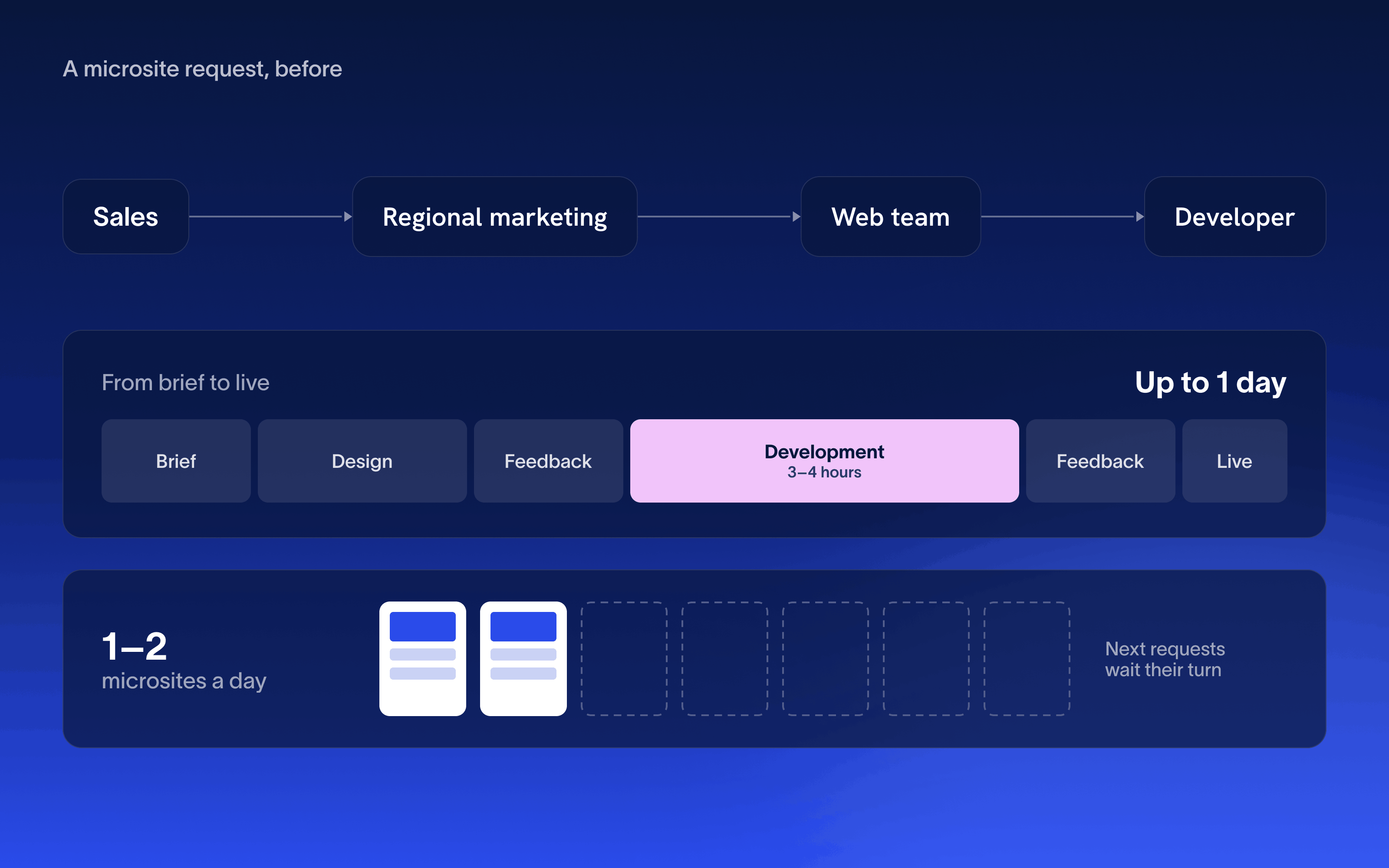
Every microsite was a micro-project
Each microsite went through a brief, design, feedback rounds, development and more feedback before going live. Development alone took 3–4 hours and the full process up to a day, so the team could deliver one, at most two, microsites a day.
Self-serve needed guardrails
Components are shared across every microsite, so changing one changes them all. Early on, marketers adjusted colors expecting to update only their own microsite, and the change rolled out everywhere. It was caught early and reversed, but it showed that giving teams freedom also meant setting clear boundaries.

Teams in every time zone
Requests arrived from Europe, the US, the Middle East and Asia-Pacific on the same day. With every build running through one web team, speed depended on who was online, and in enterprise sales, timing matters.

Solutions
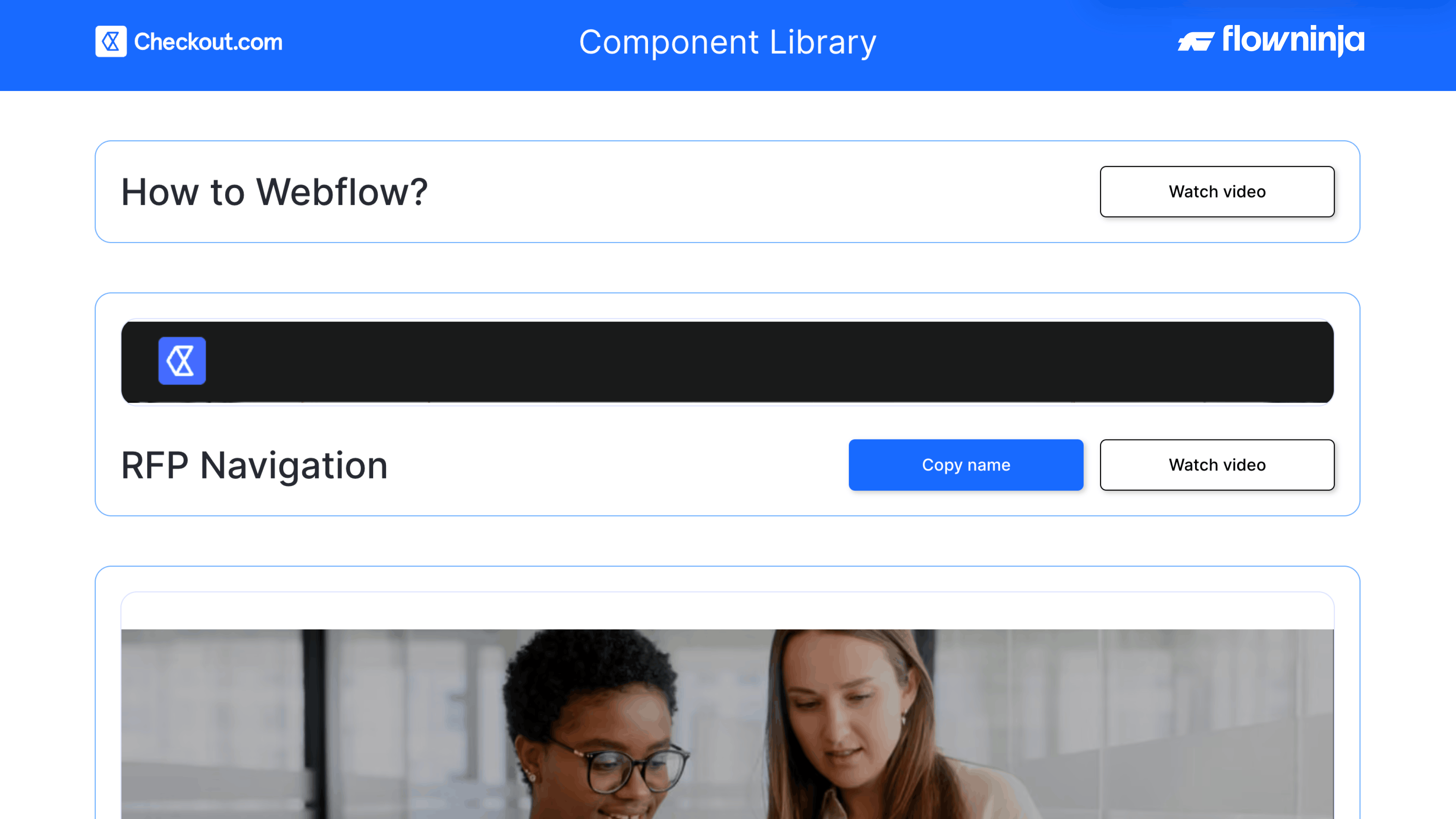
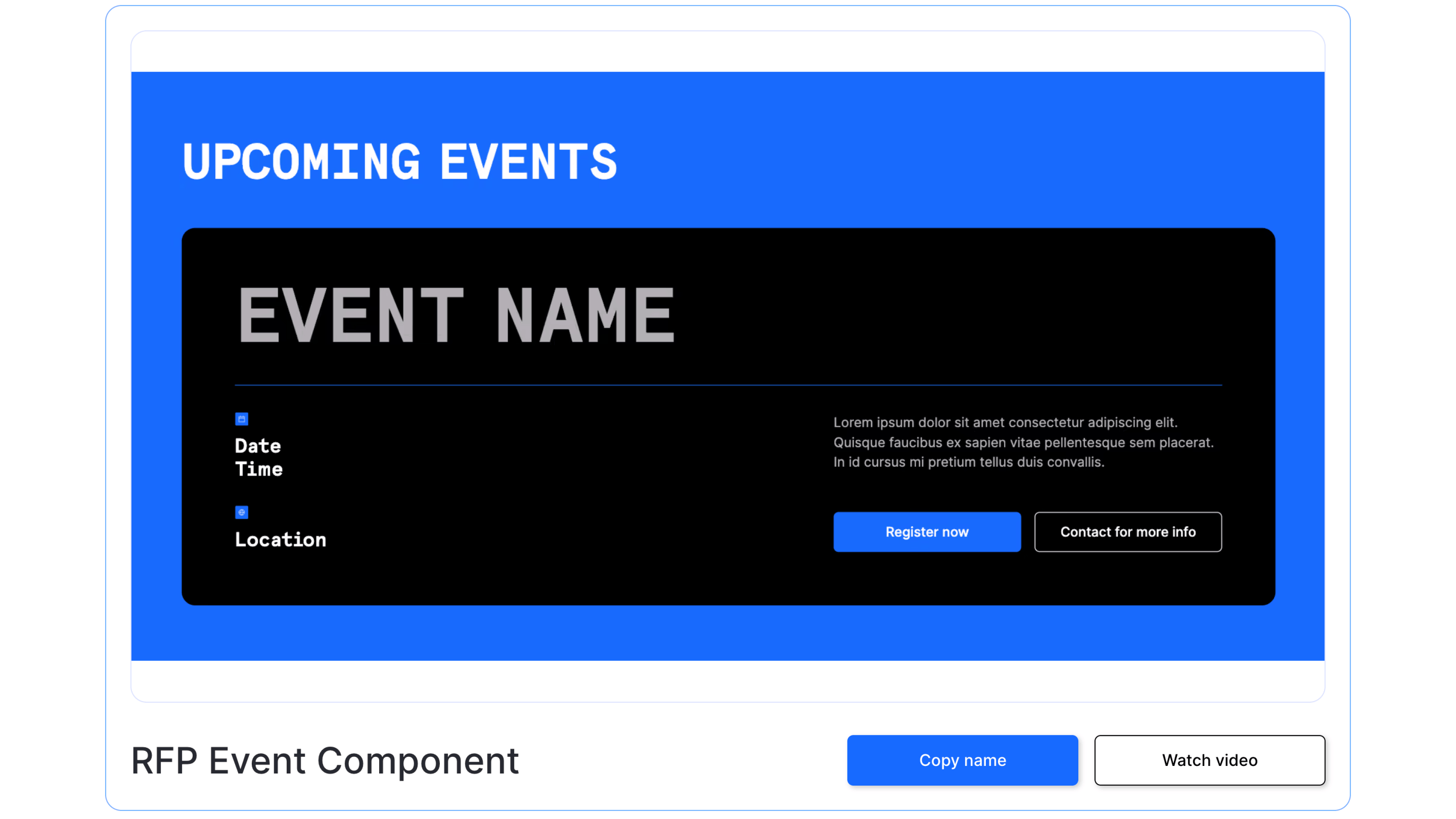
Because we had built Checkout.com’s microsites ourselves, we knew which parts had to stay fixed and where teams needed flexibility. Our WebOps team built the microsite engine as a separate, password-protected Webflow project, hidden from plain sight and search. Nine reusable components, agreed with regional marketing, let marketers drag and drop and publish a microsite in less than an hour. A custom “limited designer, can publish” role keeps components and styles locked, protecting the security and brand consistency a global fintech needs, and a live build-from-scratch session got every region up to speed.
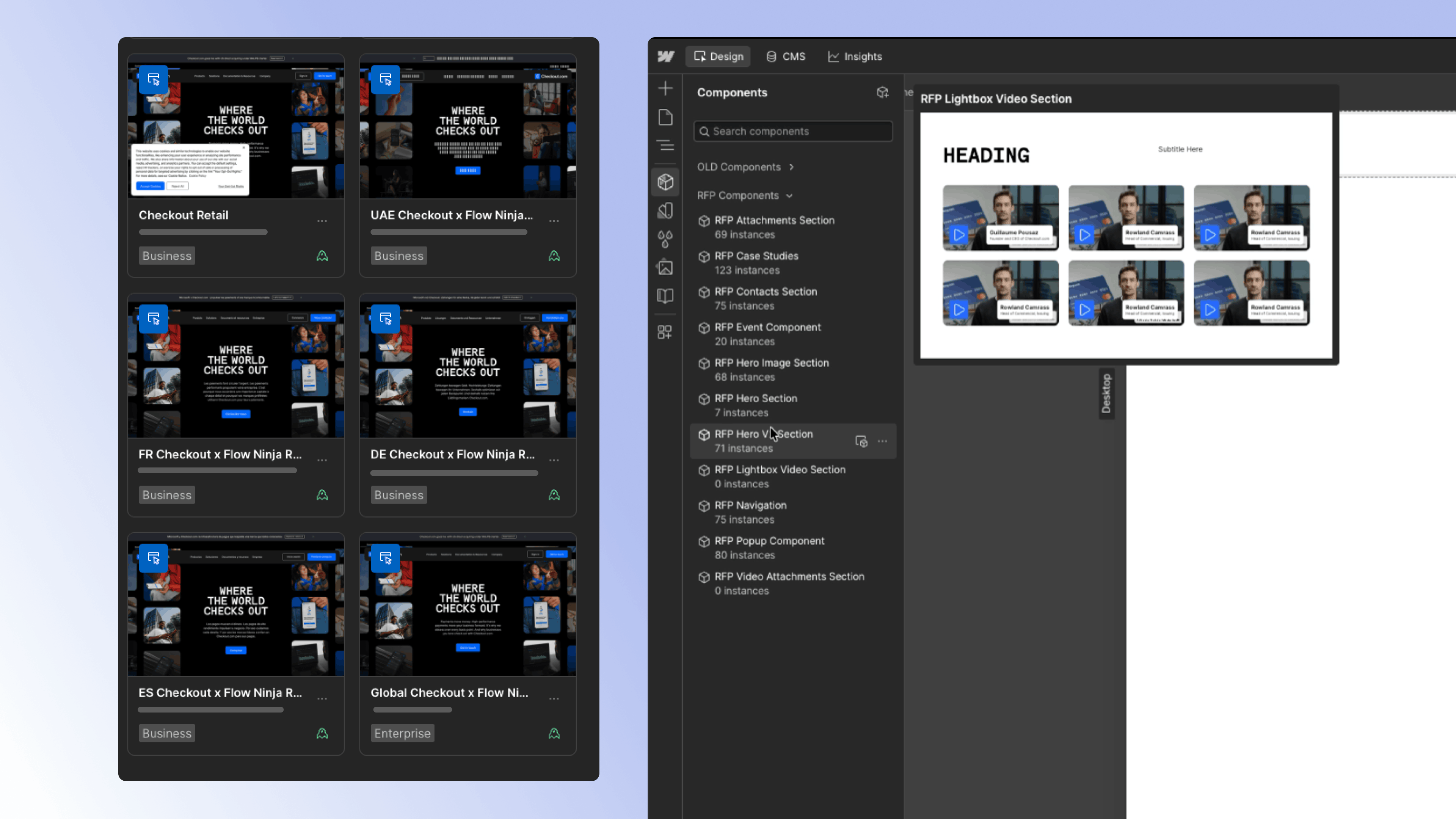
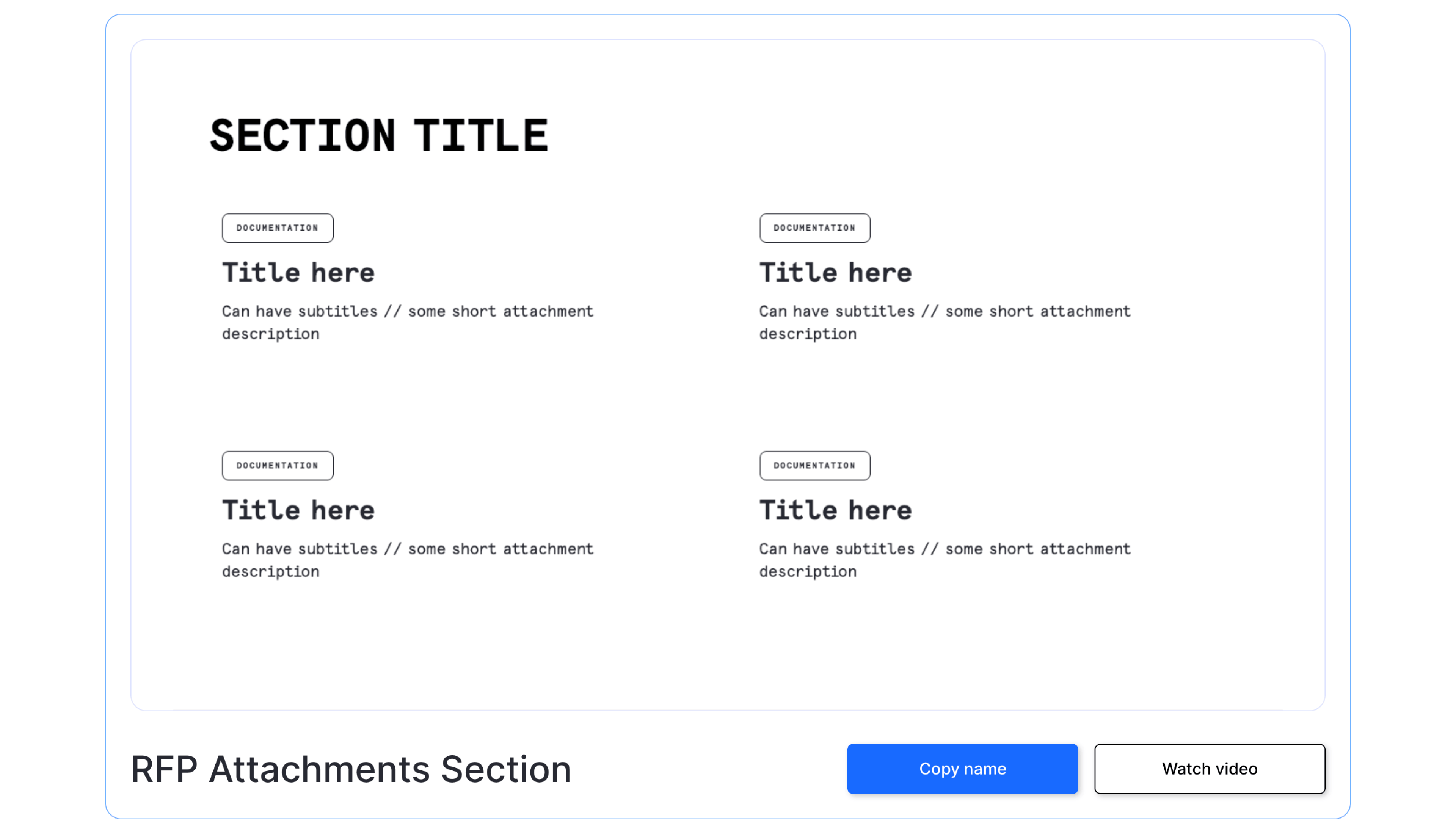
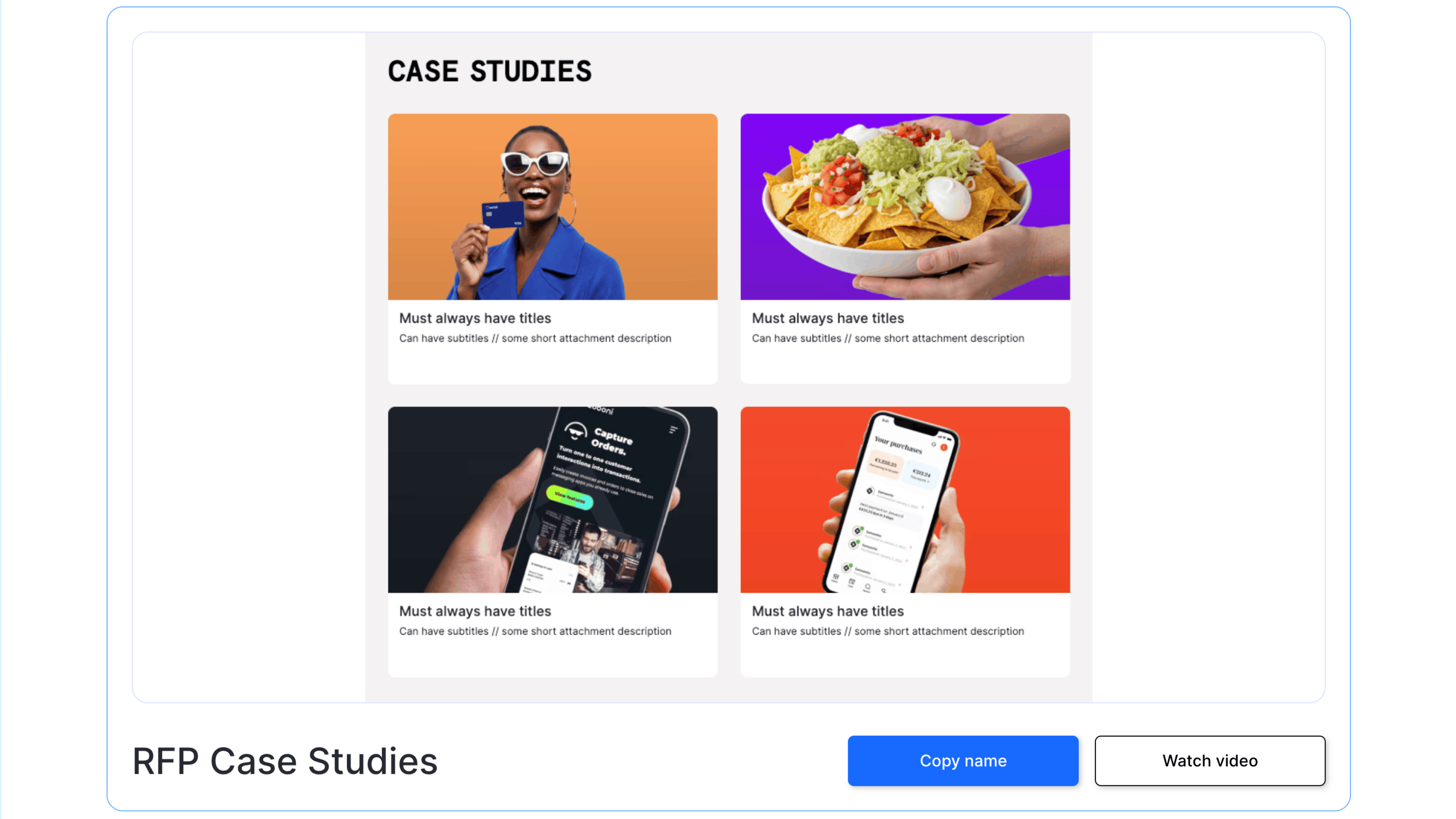
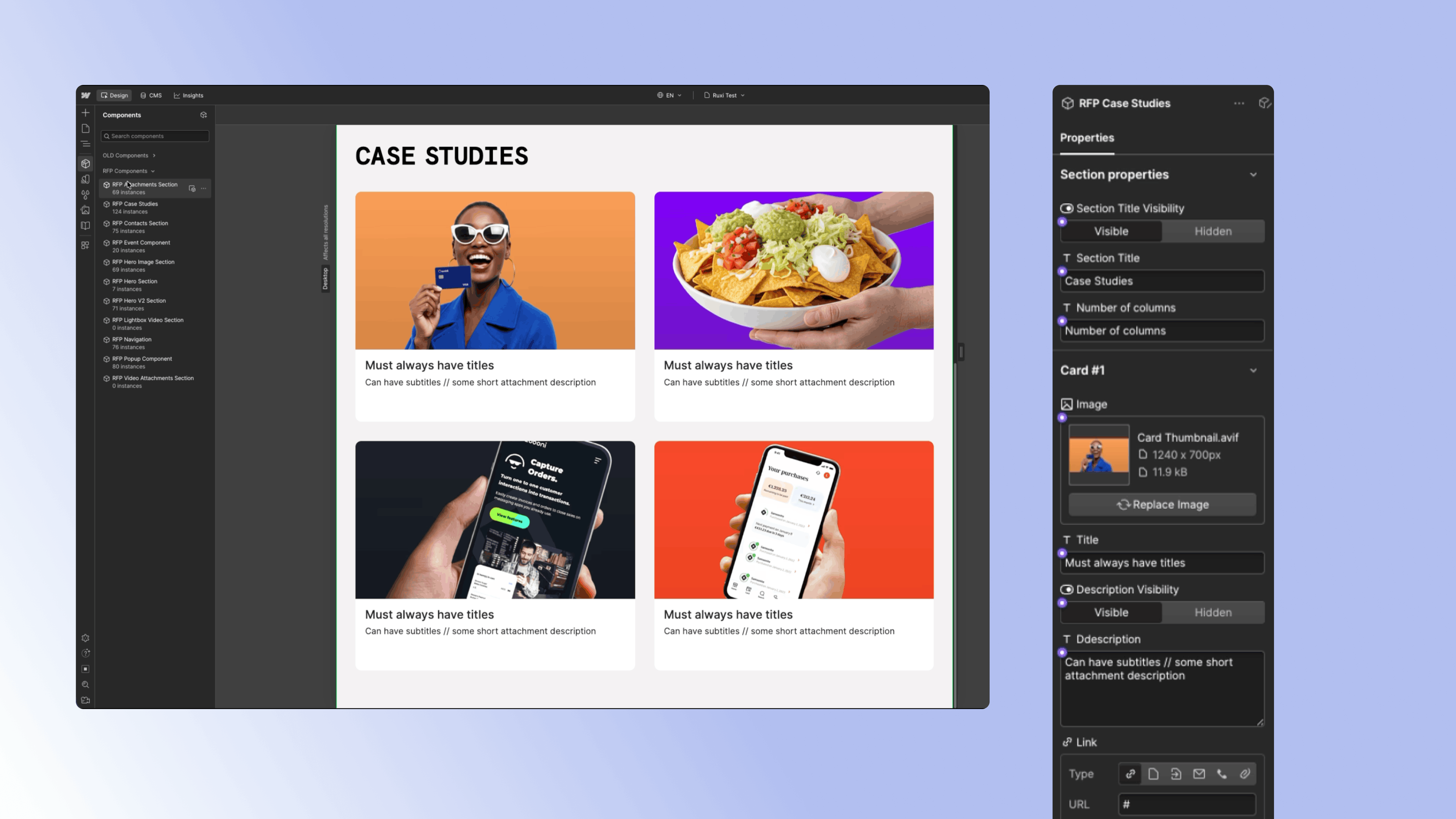
The technology was there, but the system we built around it made the difference.

The results
Today, around 10 regional marketers across 4 regions build microsites on their own in about an hour. A brief from the commercial team can become a live microsite the same day, tailored to the prospect’s industry, logo and brand colors, and updated for the life of the deal. Every page is built from the same 9 components, so it stays on brand, password-protected and out of search, and developer help is needed about once a month. When leadership reviews the program each year, the case comes down to speed, autonomy and conversion. With the system in place, Checkout.com is now piloting AI to speed up microsite production even further.
The team behind this project











Let’s build your case study next
Every case study we’ve published started with a 30-minute call.
Yours can too.